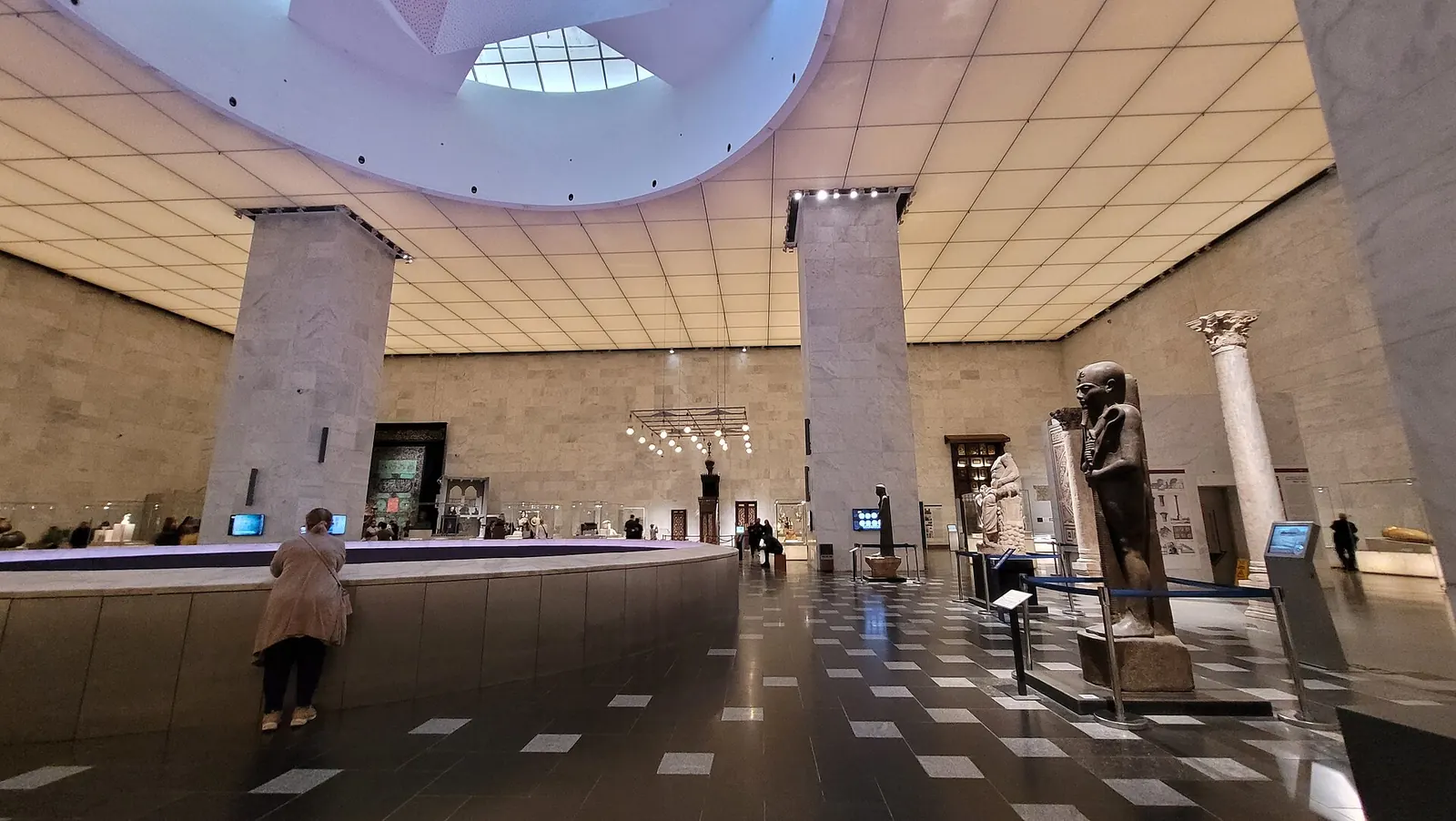
NO SIMPLE BAN
Photography can deepen or outsource attention.
A photograph can record an inventory number, preserve an inaccessible detail, support later study or help a visitor communicate. It can also become a completion gesture: point, capture, move on. The device is not the explanation; the sequence of attention is.
Research sometimes described as a “photo-taking impairment effect” suggests that photographing can reduce memory for objects under certain experimental conditions. But results depend on framing, zooming, intention, later review and what kind of memory is tested. “Cameras erase memory” is too strong.
THE THREE-IMAGE RULE
Give every frame a job.
For one gallery, allow three photographs. Image one records context: the whole case, room or relationship. Image two records evidence: a surface, repair, join or label with inventory number. Image three is personal: the work you want to retrieve later.
Before each image, state the reason in one sentence. If the reason is only “I might want this,” wait. Scarcity turns framing into an interpretive choice.
BUILD RETRIEVAL
Memory strengthens when it is asked to return.
After leaving a room, name three objects without opening the camera roll. Describe one spatial relationship and one unanswered question. This retrieval attempt reveals what was encoded and gives the photographs a later purpose.
Review images after the visit by adding the holding institution, inventory number, date and one observation. Delete redundant frames. An uncatalogued archive of hundreds may store pixels without preserving a usable memory.
A good museum photograph is not proof that you saw the object. It is a prompt that helps you see it again.
ACCESS AND SOCIAL MEMORY
Not every camera habit is tourism.
Disabled visitors may use photography as magnification or note-taking. Families use images to discuss difficult material later. Researchers document comparative evidence. Any critique that treats all phone use as shallow ignores these functions.
The practical standard is intentionality plus respect: form a question, avoid blocking others, capture only what rules allow and turn the file into a retrievable record.
Research note
The essay draws on cognitive research into photo-taking and memory while retaining the limits of laboratory findings. The three-image rule is an editorial experiment, not a universal optimum.