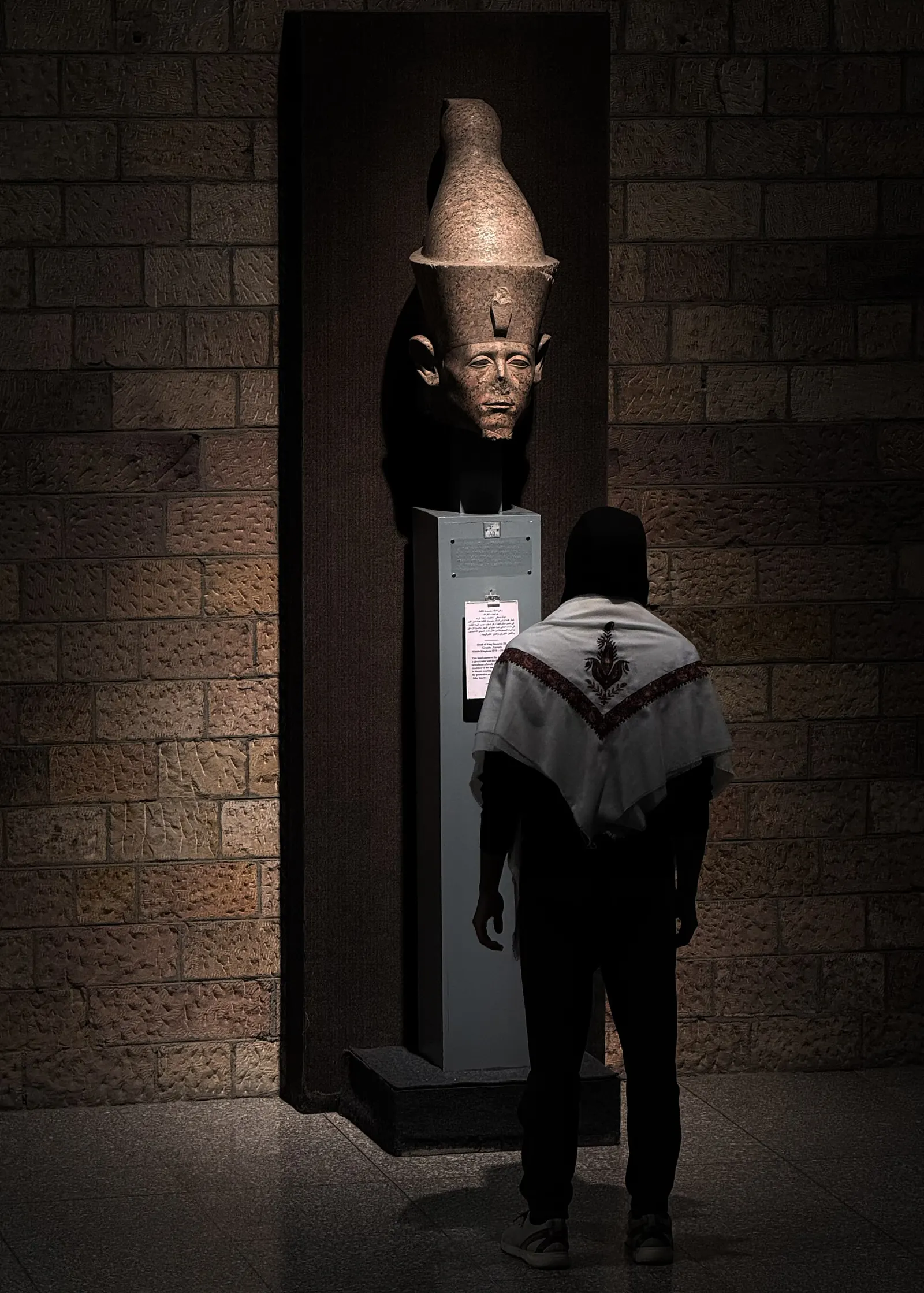
MORE THAN WALKING
Fatigue has several channels.
Standing and distance matter, but so do repeated choices, dense text, low contrast, sound, crowd negotiation, temperature and the pressure to remember. A visitor can be physically rested and cognitively finished—or physically uncomfortable while still intellectually curious.
Instead of asking “Am I tired?”, ask what has stopped working. Can you describe the last object? Can you decide which doorway to take? Are labels becoming words without meaning? Is pain changing posture? The answer determines the intervention.
A FOUR-PART CHECK
Locate the load before fixing it.
Body: feet, back, temperature, hunger, hydration, medication or restroom need.
Senses: glare, low light, echo, crowd proximity, smell or screen brightness.
Decisions: too many routes, objects, labels or group negotiations.
Meaning: no question connecting the material, or too much unfamiliar chronology at once.
THE RESET
Stop before the museum chooses for you.
A useful reset is seated where possible, away from the densest circulation and without immediately filling the pause with photographs. Eat or drink where permitted. Then choose among three honest options: resume with one narrow question, move directly to one final room, or leave.
If resuming, reduce the route to three objects sharing one material or function. The aim is to restore discrimination—the ability to notice meaningful difference—not to recover the original checklist.
Leaving early is not losing to the museum. It is protecting the part of the visit that still has shape.
DESIGN IS INVOLVED
Fatigue is not only personal.
Seating, sightlines, readable maps, label hierarchy, acoustic treatment and clear exits determine how much work visitors perform. The absence of rest points distributes access unevenly, especially for disabled visitors, older adults, pregnant people and anyone managing pain or sensory load.
Notice where fatigue appears. A bottleneck before a famous object, a long gallery without seating or a confusing transition may reveal a design problem. Reporting a specific barrier is more useful than assuming all exhaustion is inevitable.
Research note
Museum fatigue has been discussed in visitor research for more than a century. Contemporary interpretation includes physical, cognitive and sensory load rather than reducing it to time spent in a building.